Colonoscopy:
Penduluated colonoscopy+ Fair prep => repeat in 2 years
Tubular adenoma => pre-cancerous cancer.
Anemia:
B12
Ferritin
Iron panel
Folate serum
Hepatitis:
Hepatitis antibody. If positive, then Hepatitis viral load.
Fatty liver:
Fibrosure blood test: not as accurate as fibroscan.
Liver ultrasound
Abdomen ultrasound
Fibroscan: ultimate test in place of liver biopsy. However, it is usually not covered by insurance due to high costs. Very expensive.
Diarrhea:
Stool C-diff PCR usually different from Stool C-diff alone (needs to make sure pt has to have diarrhea before you order Stool C-diff PCR. Pt will go to the lab test center and produce a soft watery stool sample for the lab to test)
Showing posts with label Lab. Show all posts
Showing posts with label Lab. Show all posts
Friday, September 23, 2016

Wednesday, September 14, 2016
Carcinoembryonic Antigen (CEA)
Check in pt w/ h/o colon ca s/p resection
CEA + CA 19-9 (pancreatic ca.)
Monday, September 12, 2016
Hep B
Initial Hep B lab results:
HBsAg (Hepatitis B surface antigen)
Not detected = Normal
Detected = Abnormal
Why it works? Detects protein (antigen) that is present on the surface of the virus
When do you use it? To screen for, detect, and help diagnose acute and chronic HBV infections; earliest routine indicator of acute hepatitis B and frequently identifies infected people before symptoms appear; undetectable in the blood during the recovery period; it is the primary way of identifying those with chronic infections, including "HBV carrier" state.
anti-HBs (Hepatitis B surface antibody)
Negative = Normal
Detected = Normal (after vax) or Abnormal (after infxn
Why it works? Detects antibody produced in response to HBV surface antigen
When do you use it? Used to detect previous exposure to HBV; it can also develop from successful vaccination so it is used to determine the need for vaccination (if anti-HBs is absent) or to determine if a person has recovered from an infection and is immune (cannot get the infection again).
anti-HBc (Total anti-Hep B core, IgM, IgG)
Negative = Normal
Detected = Abnormal
Why it works? Detects both IgM and IgG antibodies to hepatitis B core antigen
When do you use it? Can be used to help detect acute and chronic HBV infections; the IgM antibody is the first antibody produced after infection with HBV; IgG antibody is produced in response to the core antigen later in the course of the infection and usually persists for life.
Read more:
https://labtestsonline.org/understanding/analytes/hepatitis-b/tab/test/
https://www.cdc.gov/hepatitis/HBV/PDFs/SerologicChartv8.pdf
HBsAg (Hepatitis B surface antigen)
Not detected = Normal
Detected = Abnormal
Why it works? Detects protein (antigen) that is present on the surface of the virus
When do you use it? To screen for, detect, and help diagnose acute and chronic HBV infections; earliest routine indicator of acute hepatitis B and frequently identifies infected people before symptoms appear; undetectable in the blood during the recovery period; it is the primary way of identifying those with chronic infections, including "HBV carrier" state.
anti-HBs (Hepatitis B surface antibody)
Negative = Normal
Detected = Normal (after vax) or Abnormal (after infxn
Why it works? Detects antibody produced in response to HBV surface antigen
When do you use it? Used to detect previous exposure to HBV; it can also develop from successful vaccination so it is used to determine the need for vaccination (if anti-HBs is absent) or to determine if a person has recovered from an infection and is immune (cannot get the infection again).
anti-HBc (Total anti-Hep B core, IgM, IgG)
Negative = Normal
Detected = Abnormal
Why it works? Detects both IgM and IgG antibodies to hepatitis B core antigen
When do you use it? Can be used to help detect acute and chronic HBV infections; the IgM antibody is the first antibody produced after infection with HBV; IgG antibody is produced in response to the core antigen later in the course of the infection and usually persists for life.
Read more:
https://labtestsonline.org/understanding/analytes/hepatitis-b/tab/test/
https://www.cdc.gov/hepatitis/HBV/PDFs/SerologicChartv8.pdf
Hep A ab (Hep A Antibody)

Aka: HAV-Ab IgM; HAV-Ab IgG; HAV-Ab total; Anti-HAV
Interpretation:
Negative: Normal
Positive:
IgM - present = Acute
IgG - present = Past infxn
Wonder Me's mnemonics for Hepatitis A antibody (HAV-Ab) lab results: Heck! Ahhh..... MGM!!
=> Heck = Hepatitis
=> Ahhh = A
=> MGM = M = earlier & G = later ('G' follows 'M')
Read more at: https://labtestsonline.org/understanding/analytes/hepatitis-a/tab/test/
Friday, April 1, 2016
Na 135-145mEq/L
The normal range for blood sodium levels is 135 to 145 milliequivalents per liter (mEq/L).
Why it works?
In lab, they put in something that binds with sodium to detect sodium. Why? 9g of NaCl is not 4.5g of Na and 4.5g of Cl. Why not? Remember the molecular weight of Na is 23g and Cl 35.5g. Therefore, to really know how much Na there is, it's hard to get it straight from blood. Why hard? blood contains many things like albumin, lipid, etc., Therefore, need to have a reagent that specifically binds to Na to really measure Na in blood. Therefore lab value for Na in blood is reported as mEq because 1 reagent:1Na molecule.
Note that 0.9%NaCl is 9g of NaCl in 1L of the entire solution. Also note that mEq in Normal Saline "contains 154 mEq/L sodium and 154 mEq/L chloride." (per http://www.rxlist.com/normal-saline-drug.htm). So that means NS is slightly more salty than Na level in blood. Then, why would you give NS? well, if you're not too dehydrated, then NS is fine but if you have kidney failure with dehydration, NS is not sooooo good for u because it's quite salty.
Wait, but you thought NS is isotonic solution? It is! It is isotonic because it's equivalent to the entire blood (remember blood has many other solutes other than just Na). So.... => Dextrose 5% 1/2NS is really the isotonic with less sodium levels than blood => that's why it's so popular.
~Wonder Me!
Why it works?
In lab, they put in something that binds with sodium to detect sodium. Why? 9g of NaCl is not 4.5g of Na and 4.5g of Cl. Why not? Remember the molecular weight of Na is 23g and Cl 35.5g. Therefore, to really know how much Na there is, it's hard to get it straight from blood. Why hard? blood contains many things like albumin, lipid, etc., Therefore, need to have a reagent that specifically binds to Na to really measure Na in blood. Therefore lab value for Na in blood is reported as mEq because 1 reagent:1Na molecule.
Note that 0.9%NaCl is 9g of NaCl in 1L of the entire solution. Also note that mEq in Normal Saline "contains 154 mEq/L sodium and 154 mEq/L chloride." (per http://www.rxlist.com/normal-saline-drug.htm). So that means NS is slightly more salty than Na level in blood. Then, why would you give NS? well, if you're not too dehydrated, then NS is fine but if you have kidney failure with dehydration, NS is not sooooo good for u because it's quite salty.
Wait, but you thought NS is isotonic solution? It is! It is isotonic because it's equivalent to the entire blood (remember blood has many other solutes other than just Na). So.... => Dextrose 5% 1/2NS is really the isotonic with less sodium levels than blood => that's why it's so popular.
~Wonder Me!
Thursday, March 31, 2016

Hepatitis lab interpretation
Hepatitis:
With #: http://www.hepatitiscentral.com/hcv/labs/hbvcontents/
Interpretation easy to read (a bit out-dated 2010):
http://oaml.com/PDF/2010/Hepatitis%20Results%20Interp.%20FINAL-Aug%2024%202010.pdf
http://www.hepb.org/pdf/understanding_blood_tests.pdf
http://www.cdc.gov/hepatitis/HBV/PDFs/SerologicChartv8.pdf
http://www.hepb.org/pdf/understanding_blood_tests.pdf
http://www.cdc.gov/hepatitis/HBV/PDFs/SerologicChartv8.pdf
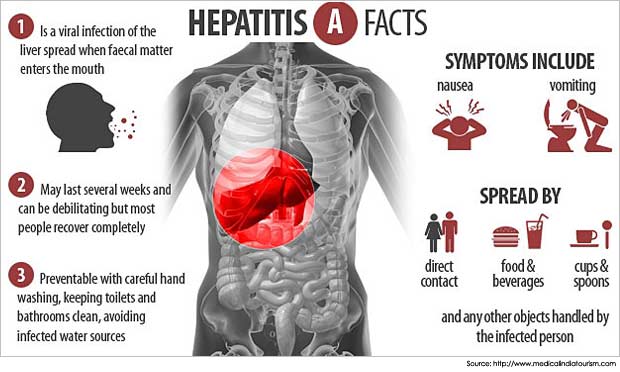
Hepatitis A
Mini-Case*: Pt's Hepatitis A came back positive results. Why don't you treat patient for Hepatitis A?
Thinking: it's positive. Why don't you treat?
Conclusion: Self-limited (look up self-limited in medical dictionary if you don't know what it is already). Supportive therapy only. Excellent prognosis.

Resources:
Helpful chart to intepret different types of hepatitis lab test results: http://oaml.com/PDF/2010/Hepatitis%20Results%20Interp.%20FINAL-Aug%2024%202010.pdf
Thinking: it's positive. Why don't you treat?
Conclusion: Self-limited (look up self-limited in medical dictionary if you don't know what it is already). Supportive therapy only. Excellent prognosis.
More:
When to order:
- To help dx acute hepatitis cause
- Evaluate the need for hep A vaccine
What to order:
- Part of viral hepatitis panel.
What to collect:
- Blood sample
Resources:
Helpful chart to intepret different types of hepatitis lab test results: http://oaml.com/PDF/2010/Hepatitis%20Results%20Interp.%20FINAL-Aug%2024%202010.pdf
Cholesterol or lipid profile
Mini-Case*: Patient - My cholesterol is 295.... Don't remember what type of cholesterol. Aren't they all the same?
Thinking: Cholesterol values include Total cholesterol, LDL, HDL, VLDL, which one? What is what?
=> Conclusion: most likely to be 'Total cholesterol' if pt only can only report 1 # but not any other #'s.
Case*: Pt is 50y/o with diabetes. Which Cholesterol level to start on Simvastatin?
Answer: Cholesterol level doesn't matter. No need to obtain lipid panel test. Just start them on Simvastatin.
Case*: Pt asks How does Simvastatin affect HDL and LDL?
Answer: Lower LDL but very miniscule effects on HDL

Why it works?
Blurb:
What is total cholesterol?
Total Cholesterol (done by enzymes, measured directly from blood): Total cholesterol can be measured directly from blood. Enzyme (cholesterol oxidase) is added to produce reaction byproducts, H2O2. Enzyme (Peroxidase) is then added to produce color. This color is electromagnetically analyzed at 500nm. The intensity of this color is directly proportional to cholesterol concentration.
Triglycerides (done by enzymes, measured directly from blood) - must be fasting for correct level of triglycerides
HDL (done by special agents, measured directly from blood, read by color intensity produced from electromagnet)
LDL: very expensive to measure directly from blood via ultra-centrifuge. So, use Friedwald equation (only correct if pt is fasting)
LDL-Cholesterol: Most of the circulating cholesterol is found in three major lipoprotein fractions: very low density lipoproteins (VLDL), LDL and HDL.[Total chol] = [VLDL-chol] + [LDL-chol] + [HDL-chol]
LDL-cholesterol is calculated from measured values of total cholesterol, triglycerides and HDL cholesterol according to the relationship:
[LDL-chol] = [total chol] - [HDL-chol] - [TG]/5
where [TG]/5 is an estimate of VLDL-cholesterol and all values are expressed in mg/dL.
~Miss Student
*All cases are fictitious. No real patient encounters. Just my rich imagination! :)
Read lab values:
Mnemonics: High Healthy HDL; Low Let it down LDL ~Miss Student


Nutrition:

Diet restrictions:
1 - No Alcohol 24hrs before tests (elevate #)
2 - No eating 12 hrs before tests (elevate triglycerides)
3 - No water restrictions
Clinical procedure:
- Blood lab test (venipuncture)
- Red tube (fasting)
Who should be screened?:
In priority order:
- - All men over 35 y/o even in absence of any risk factors for CHD
- - Men & women >20 y/o with increased risks for coronary heart disease (CHD)
Increased risk, for the purposes of this recommendation, is defined by the presence of any one of the risk factors listed below. The greatest risk for CHD is conferred by a combination of multiple listed factors.
- Diabetes.
- Previous personal history of CHD or non-coronary atherosclerosis (e.g., abdominal aortic aneurysm, peripheral artery disease, carotid artery stenosis).
- A family history of cardiovascular disease before age 50 in male relatives or age 60 in female relatives.
- Tobacco use.
- Hypertension.
- Obesity (BMI ≥30).
10-year CVD risk factors: http://cvdrisk.nhlbi.nih.gov/
Helpful link:
http://www.gpnotebook.co.uk/simplepage.cfm?ID=x20030114211535665170: short need-to-know details for lipid profile info.
(2) http://www.cdc.gov/nchs/data/nhanes/nhanes_03_04/l13_c_met_lipids.pdf: how to calculate total cholesterol => not how total cholesterol is usu. obtained since you can do measure total cholesterol by hands
http://www.wikihow.com/Calculate-Total-Cholesterol => how lipid panel is really measured
http://www.uspreventiveservicestaskforce.org/Page/Document/RecommendationStatementFinal/lipid-disorders-in-adults-cholesterol-dyslipidemia-screening#consider
Subscribe to:
Posts (Atom)